


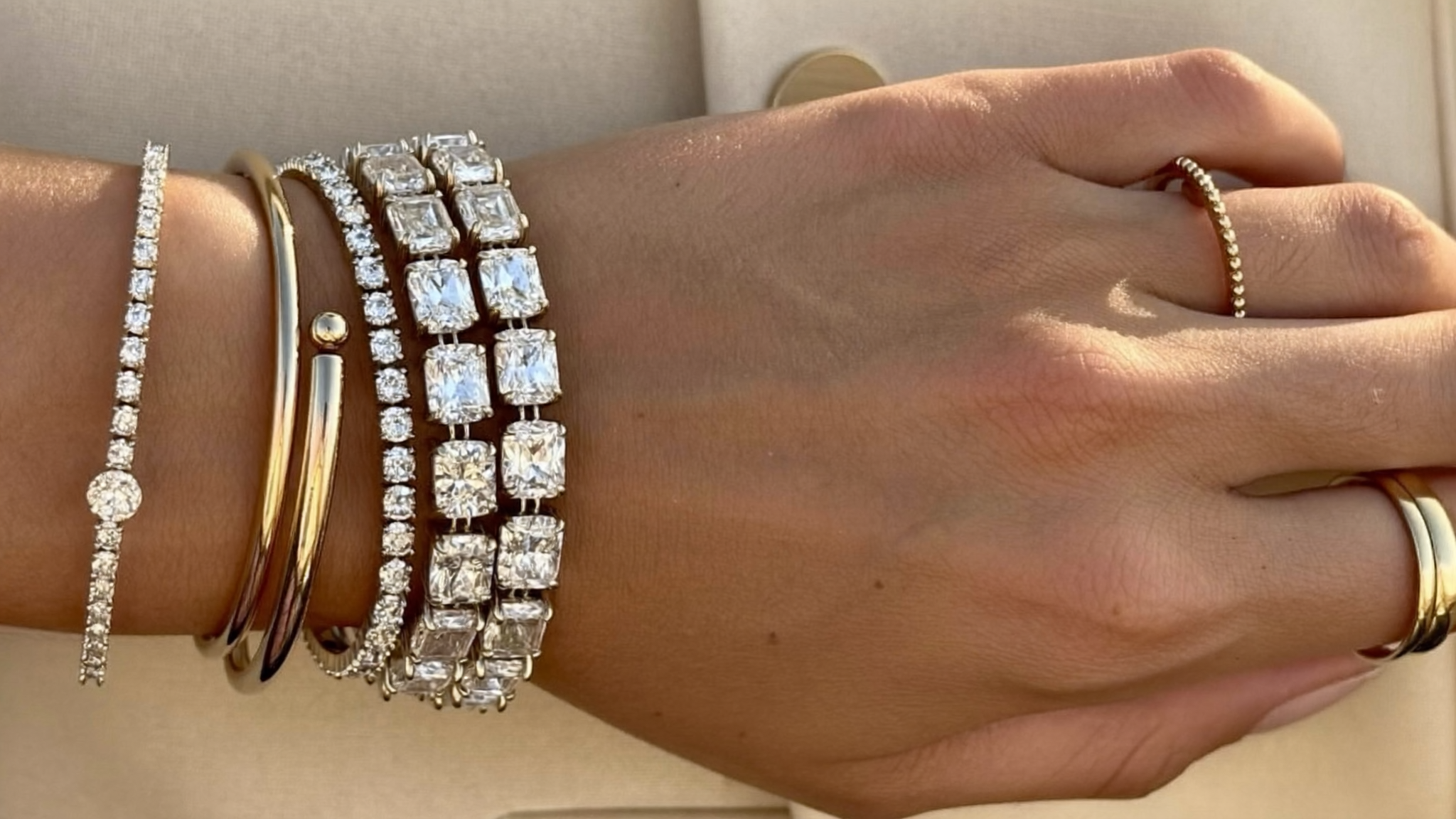
The Wrist, Restacked
If one piece defines jewelry in 2026, it is the diamond tennis bracelet — and the way it is worn has changed entirely. Once reserved for black tie, it has become the anchor of the year's defining trend: the wrist stack.
The continuous line of a tennis bracelet is the piece that holds a stack together, which is exactly why it has moved from the jewelry box to everyday rotation. Below is a practical, build-it-yourself guide to styling yours — whether you are starting your first stack or refining a look you already love.
Start With One Defining Line
Every great wrist stack begins with an anchor: a single continuous line of diamonds that sets the tone. If you are starting out, choose a refined, everyday-friendly width that will not compete with the pieces you add later. The Aurore Round Diamond Tennis Bracelet (from $1,450) and the dainty Rivière Round Diamond Tennis Bracelet (from $1,600) are built for exactly this — enough brilliance to stand alone, light enough to layer without crowding the wrist.
Layer Textures, Not Duplicates
The principle behind a stack that reads curated rather than crowded is contrast. Mix textures, widths, and finishes that complement without matching: pair your tennis bracelet with a plain gold bangle, a fine cable chain, or a slim watch. The smooth metal of a bangle makes the diamond line read brighter beside it, while a delicate chain softens the whole arrangement. Aim for two to four pieces total — beyond that, the eye stops reading individual pieces and starts seeing clutter.
Add Color The Modern Way
Color is making a decisive return in 2026. Emerald-cut and colored-stone tennis styles are appearing in refined, diamond-line silhouettes, adding depth to an all-white stack. The Éclat Emerald Diamond Tennis Bracelet (from $500) introduces the precision of an emerald cut — the most demanding cut to set cleanly — and sits beautifully alongside a round-brilliant line, letting the step facets and the sparkle play off one another.
Mix Your Metals On Purpose
Mixed-metal stacking is no longer a rule to break — it is a styling choice. A yellow-gold tennis bracelet layered with a rose-gold band reads warm and deliberate. Because every Roomy's tennis bracelet is offered in yellow and rose gold across 10kt, 14kt, and 18kt, you can build a tonal stack in a single hue or a deliberately mixed one without anything looking accidental. The key is commitment: choose tonal or mixed, and let the rest of the stack agree with that decision.
Take One Piece From Day To Evening
The reason the tennis bracelet earns its place in 2026 is range. Worn solo with a linen shirt, the Céleste Round Diamond Tennis Bracelet (from $1,700) is quiet luxury — understated brilliance that signals quality without announcing it. Build it into a stack with the Étoile (from $3,150), then add a statement piece like the Lumière Pear Diamond Tennis Bracelet (from $6,550) for evening, and the same wrist transforms completely.
Why Lab-Grown Leads The Stack
The shift toward stacking has been accelerated by lab-grown diamonds, which now account for the majority of diamond center stones sold in the US. They are chemically, optically, and physically identical to mined diamonds, carry traceable provenance, and cost 30 to 40 percent less for the same specifications — which is what makes building a multi-bracelet stack realistic rather than aspirational. Every Roomy's piece is IGI and Roomy's certified, so each diamond in your stack is independently verified. And if you are budgeting your first anchor piece, our lab grown diamond tennis bracelet price guide breaks down exactly what each tier costs — and why.
Frequently Asked Questions
How many bracelets make a good stack?
Can you wear a tennis bracelet every day?
Should the metals in my stack match?
Are lab-grown diamonds real diamonds?
Build Your 2026 Stack
Lab-grown, IGI-certified diamond tennis bracelets in yellow and rose gold, crafted to be layered and worn every day.
Shop The Collection


