


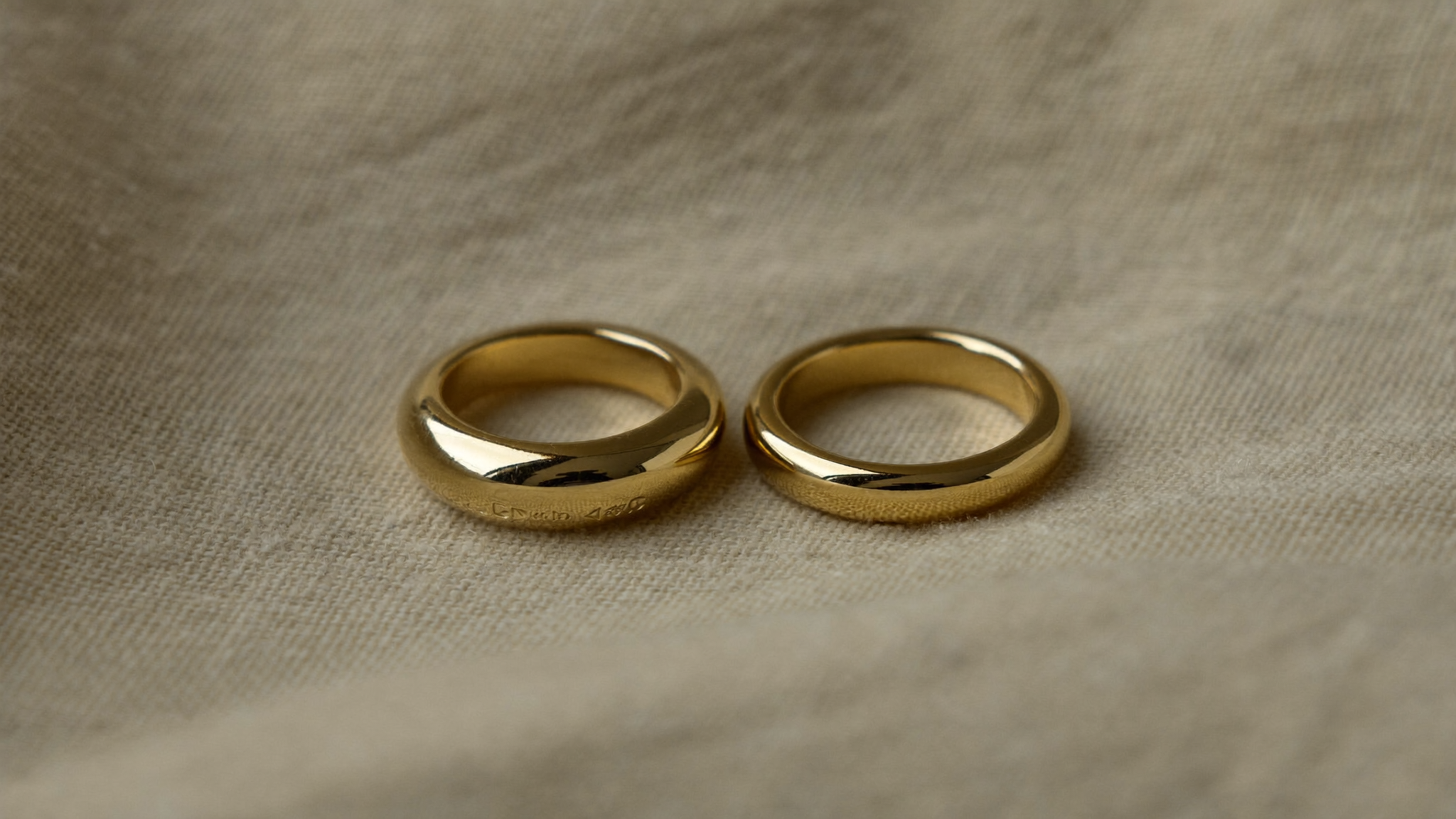
The Gold Standard: 14K vs 18K
Gold closed above $4,180 an ounce this week, and the question we're fielding most isn't about diamonds at all — it's about the metal underneath them. Choosing between 14K and 18K gold used to be a matter of taste. In 2026, with gold prices roughly a quarter higher than a year ago, it's also a real financial decision.
The good news: karat purity isn't a quality hierarchy, and higher isn't automatically "better." It's a tradeoff between color depth, everyday durability, and cost — one that now carries a wider price gap than it did two years ago. Here's how to think about it before you choose a metal for your next piece.
What "Karat" Actually Measures
Karat measures the ratio of pure gold to alloy metals (copper, silver, palladium) mixed in to give gold the strength it needs for jewelry — 24-karat gold on its own is far too soft to hold a diamond securely. 18K gold is 75% pure gold, which gives it a warmer, richer color, especially noticeable in yellow and rose gold. 14K gold is 58.3% pure gold, meaning a higher share of alloy — which is exactly why it wears better day to day. Every piece in our collection is available in solid 10K, 14K, and 18K gold, so this is a decision you'll make on nearly every order. And once you've settled on a karat, the next question is which color of gold to choose — our yellow vs white vs rose gold guide breaks down how each tone flatters your skin and your diamond.
14K vs 18K: The Honest Tradeoffs
On hardness, 14K wins: the higher alloy content makes it more scratch-resistant and better suited to rings and bracelets that take daily knocks. On color, 18K wins: the deeper gold saturation is the reason it remains the choice for statement pieces, where that richness is the whole point. On price, the gap has widened. With gold near $4,200 an ounce, an 18K piece can now run 30–40% higher than the identical design in 14K — noticeably more than the same comparison two years ago. Take the Starlight Portal Diamond Stud Earrings (from $1,500): the 10K version starts at $1,500, but the 18K version runs $2,600 — over $1,100 more for the same design, same diamonds, same setting.
Which Pieces Are Worth the 18K Upgrade
We generally point clients toward 14K for anything worn constantly against friction: engagement rings, stacking bands, tennis bracelets. The Duet Diamond Bypass Ring (from $1,150) and Linear Diamond Half Eternity Band (from $700) are both built for daily wear, and 14K's extra hardness shows up years down the line as fewer visible scratches. Pendants, studs, and drop earrings see far less abrasion, which is where 18K's color depth gets to shine without the durability tradeoff working against you — pieces like the Heart Diamond Pendant (from $850) or Emerald Ribbon Diamond Stud Earrings (from $500) are strong 18K candidates if the price difference fits your budget. For a high-carat investment piece like the Prestige Round Diamond Tennis Bracelet (from $5,100), we'd lean 14K unless it's genuinely reserved for occasion wear rather than daily rotation.
How the Price Gap Actually Breaks Down
The jump from 14K to 18K isn't a flat fee — it scales with the amount of gold in the piece, so it hits larger pieces harder. On the Heart Diamond Pendant, moving from 10K to 14K adds $250; on the Prestige Tennis Bracelet, the same karat jump adds $2,250, because there's simply more metal in a wrist-length setting. This is exactly why we've seen more clients this year choosing 14K for larger pieces and reserving 18K for smaller, symbolic ones — it's a way to get the richer gold tone somewhere visible without absorbing the premium across an entire bracelet's worth of metal.
Whichever karat you choose, keeping that gold bright comes down to upkeep: our guide on how to clean diamond jewelry at home walks through the five-minute routine that protects the metal you just paid for.
Frequently Asked Questions
Is 18K gold worth the extra money?
Does karat purity affect the diamond itself?
Will 14K gold tarnish or turn my skin green?
What karat is best for an everyday engagement ring?
Choose the Metal That Fits Your Life
Every piece in solid 10K, 14K, and 18K gold — lab-grown, IGI-certified, made to be worn.
Shop the Collection


