


The Pendant Edit
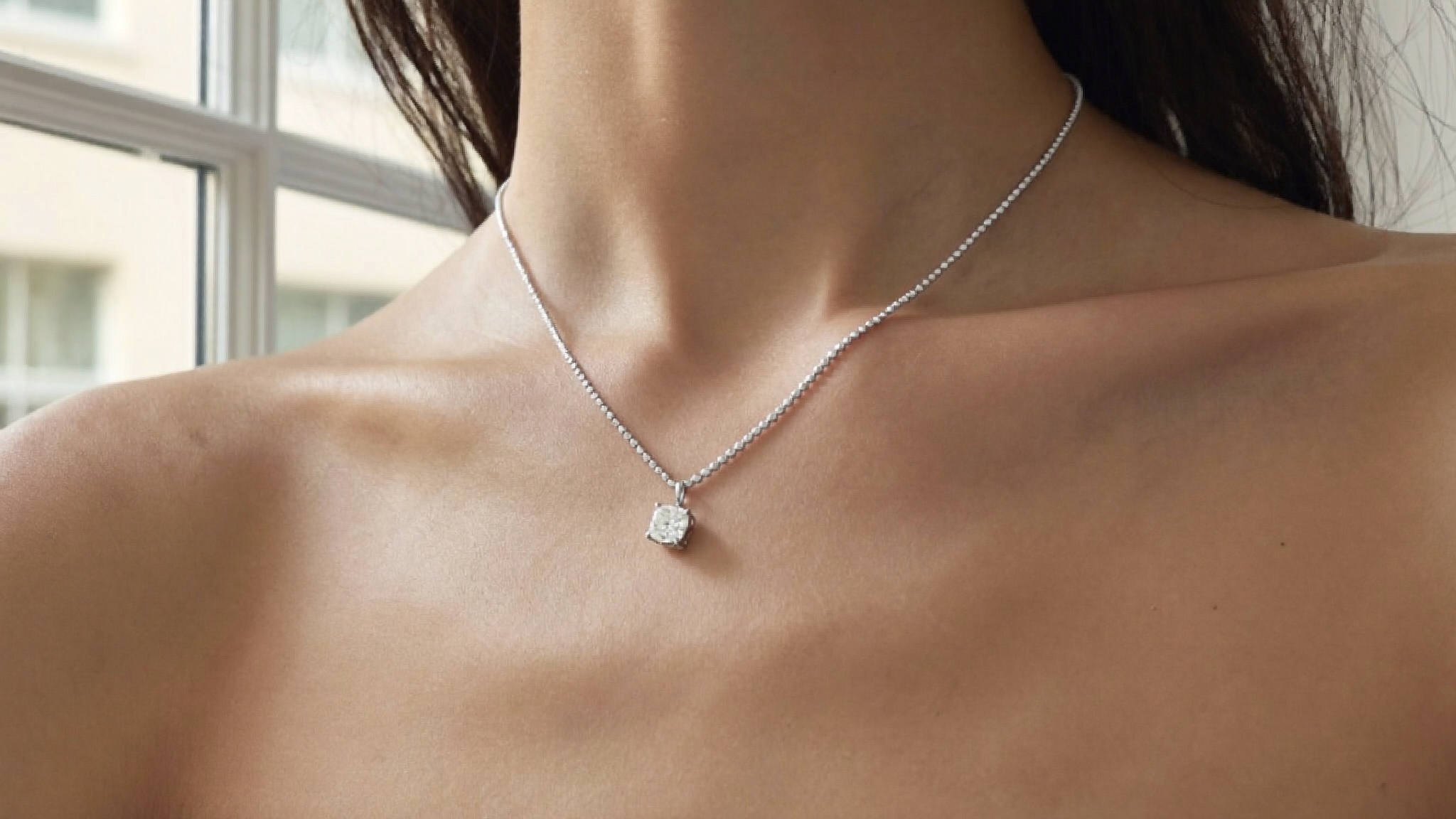
Necklaces got quiet this year. After a decade of layering everything at once, 2026 is rewarding restraint — one diamond, one chain, placed with intention. The pendant is having its moment, and it isn't a trend so much as a correction.
Editors are calling it a shift from stacking to statement-by-subtraction: fewer stones, better placement, more sparkle per gram of gold. Solitaire pendants with sleek bezels are leading the pack, halo settings are having a resurgence, and lightweight lab-grown diamond designs are replacing the heavy layered looks that dominated the last few years. It's a good moment to actually understand what you're buying, so here's what's real and what's just marketing.
Why Pendants Are Having a Moment
The math changed the aesthetic. A one-carat lab-grown diamond now costs a fraction of what it did in 2018, which means a single, well-cut stone can carry a whole piece without apology. That's part of why solitaire pendants — one stone, a slim bezel, a fine chain — are the style editors keep returning to for 2026. Our Oval Diamond Solitaire Pendant (from $2,000) is a straightforward example: the elongated oval cut does the work a cluster of smaller stones used to have to do.
At the same time, jewelry is getting more personal. Initial pendants, birthstone pieces, and sentimental single-stone designs are outselling generic statement pieces, because a pendant sits at the collarbone — the one place on the body where a piece of jewelry reads as a sentence rather than a costume. That same instinct for personal meaning is driving 2026's biggest necklace story, the diamond charm necklace trend, where several small pendants layer into one collected look.
Four Pendant Styles Worth Knowing
Not every pendant does the same job. Solitaire pendants — a single stone, minimal setting — read as everyday-elevated; the Oval Diamond Solitaire Pendant (from $2,000) is built for daily wear. Halo settings, where a center stone is ringed with smaller diamonds, add presence without added carat weight — see the Halo Round Diamond Pendant (from $850). Cluster and statement designs, like the Marquise Diamond Cluster Pendant (from $1,200) or the Ribbon & Baguette Diamond Statement Necklace (from $2,300), are for occasions where you want the piece to do the talking. And sentimental shapes — hearts, circles, symbols — like the Heart Diamond Pendant (from $850) or the entry-level Liquid Diamonds Marquise Flow Pendant (from $250), work as first-fine-jewelry pieces or gifts that mean something specific.
Chain Length, Metal, and Carat: What Actually Matters
Chain length decides how the pendant reads. Sixteen to seventeen inches sits at the collarbone and works for higher necklines; eighteen to twenty inches drops just below, which is more forgiving with lower necklines and layers more easily. There's no universally "correct" length — it's a function of your neck and what you're wearing it with, so if you're between sizes, size up rather than down.
On metal: 10kt gold is the most affordable and most durable for daily wear because it has the highest alloy content; 14kt is the industry standard, balancing durability with a richer color; 18kt gold has the deepest, warmest tone but is softer and shows wear faster on an everyday piece worn against clothing and skin. For a pendant you'll wear constantly, 14kt is usually the sensible middle. On carat: pendants don't need to be large to read as substantial, because they sit close to the eye — a well-cut half-carat solitaire at the collarbone often reads larger than the same stone would in a ring. And if you would rather the necklace lead the whole look, our guide to diamond statement necklaces covers 2026's red-carpet trend.
Frequently Asked Questions
What's the difference between a pendant and a necklace?
Are lab-grown diamond pendants worth it compared to mined diamonds?
What carat size pendant should I buy?
How do I clean and care for a diamond pendant?
One stone, worn with intention.
Every Roomy's pendant is IGI-certified, handcrafted in solid gold, and priced without the mined-diamond markup.
Shop the Collection


