


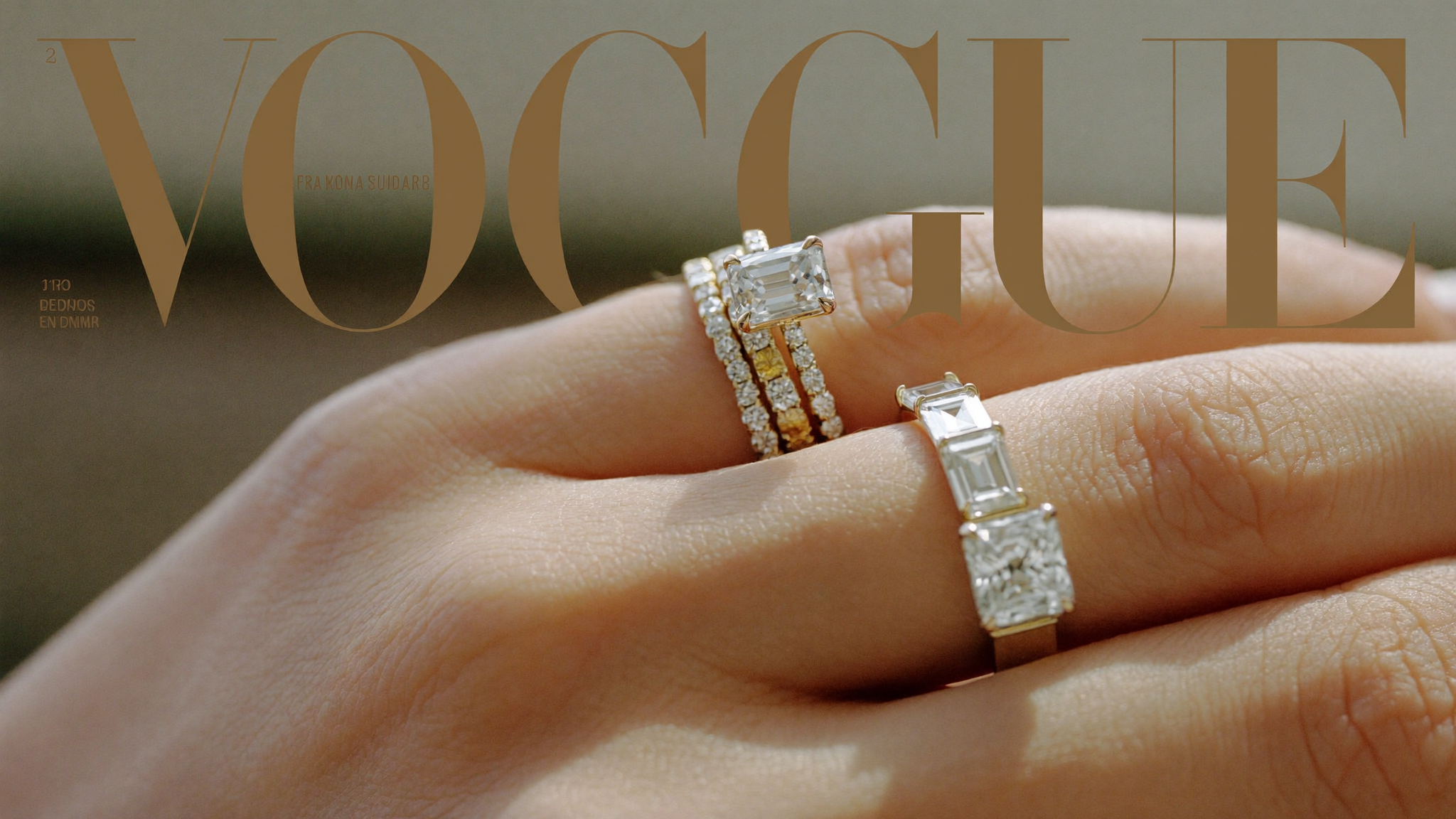
The Eternity Band, Decoded
A ring with no beginning and no end has quietly become the anniversary gift of the year — and for the first time, the version set entirely in diamonds is something most couples can actually reach.
The eternity band is having a moment that has little to do with novelty. As lab-grown diamonds reshape what a full circle of stones costs, the piece once reserved for a tenth or twentieth milestone is showing up at first anniversaries, push-present moments, and on the hands of people simply marking a year they want to remember. The design is ancient — an unbroken line of identical stones, read as a symbol of continuity since antiquity — but the math behind it has changed completely. Understanding that math is how you buy one well.
Full or Half: The Decision That Sets Everything Else
Before cut or carat, settle one question: how far around the band do the diamonds run? A full eternity sets stones across the entire circle; a half eternity covers the front 40 to 50 percent and leaves the underside in smooth metal. That single choice ripples through price, comfort, and longevity. A full band carries roughly twice the diamonds of a comparable half, which is why it costs close to double for the same stone size — and why it reads as the more ceremonial of the two. The half band, like our Linear Diamond Half Eternity Band (from $700), gives you nearly the same face-up sparkle for meaningfully less, sits more comfortably against an engagement ring, and — critically — can be resized later.
Cut: Where the Personality Lives
Once coverage is decided, the cut of the stones is what gives an eternity band its voice. Round brilliants throw the most fire and never look dated. Step cuts — emerald above all — trade sparkle for architecture, lining up like clean panes of glass; the Prism Emerald Eternity Band (from $1,050) bezels each stone in an Art Deco rhythm. For something with more movement, marquise cuts elongate and catch light from their points: set east-west, they run like a ribbon down the finger in our Marquise Eternity Diamond Band (from $1,900), or arrange into small pinwheels in the Windmill Marquise Eternity Band (from $1,950). Every stone is lab-grown, IGI-certified, and set in solid 10, 14, or 18kt gold — the same hardness of 10 on the Mohs scale as any mined diamond, with the certification to prove it.
Building a Stack Worth Keeping
The most modern way to wear an eternity band is rarely alone. Pair a slim half band against a solitaire to frame it, or layer two narrow bands for a graduated line of light. For couples who want the symbolism doubled, the Duo Diamond Double Band (from $2,100) joins two bands at the center — a single ring that reads as a stack. Mixing metals is encouraged: a yellow-gold band warms a white-gold engagement ring, and rose gold softens both. The discipline is in scale, not restraint — keep the band widths in conversation with each other and the diamonds do the rest. If you are choosing a first wedding band rather than an anniversary upgrade, our diamond wedding band guide walks through coverage, profile, and matching the band to your ring.
Frequently Asked Questions
What anniversary is an eternity ring traditionally for?
Is a half or full eternity band better for everyday wear?
Are lab-grown diamonds real diamonds?
Why are eternity bands more affordable in 2026?
A Circle Worth Marking
Explore lab-grown, IGI-certified eternity bands in solid gold — built for the milestones you'll want to remember.
Shop the Collection


