


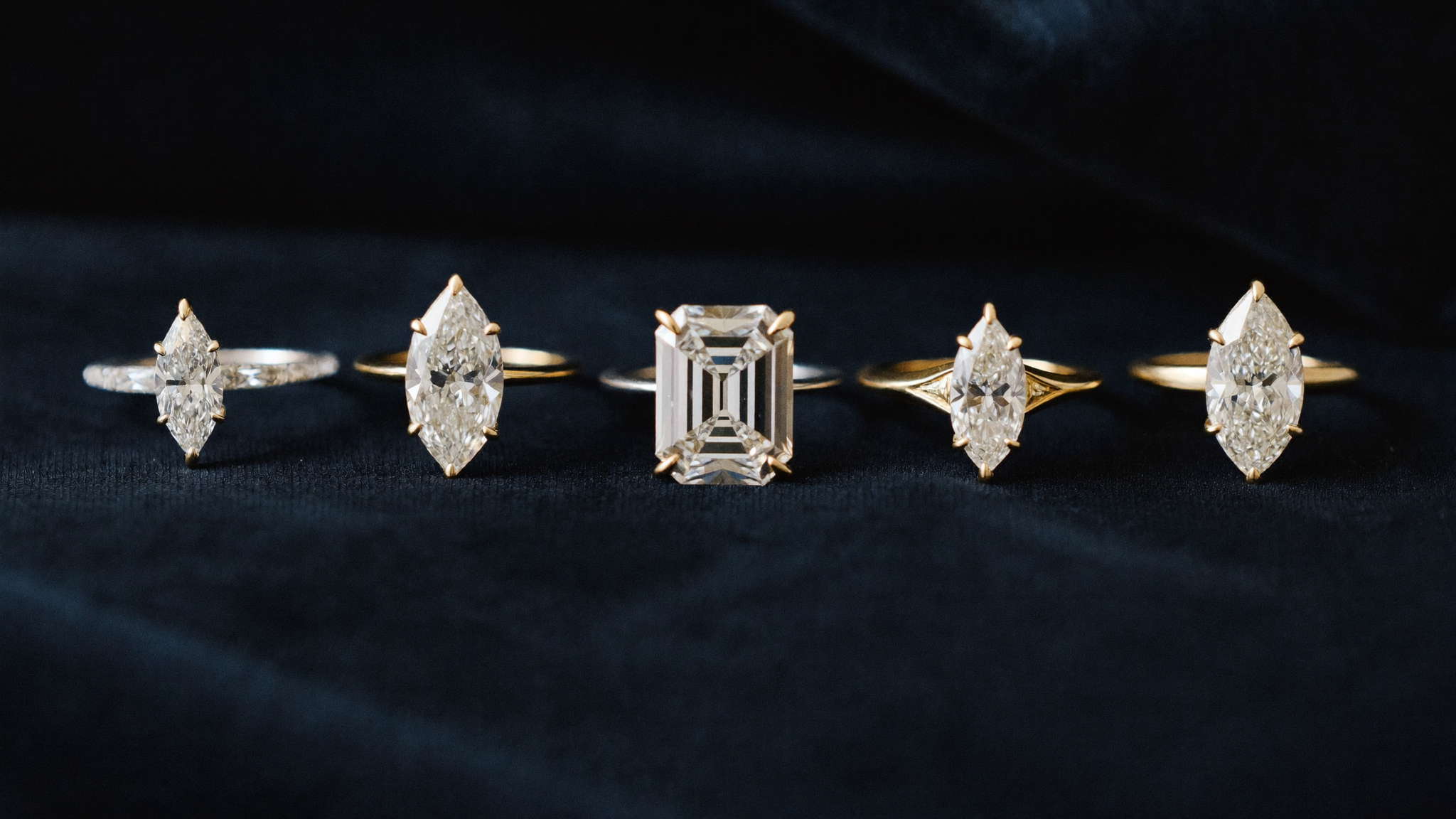
Every Cut Tells a Different Story
Diamond cut is having a moment few outside the industry saw coming. Marquise, the sharp, elongated shape favored by 1970s icons, has surged back into demand, and choosing a shape has become as personal a decision as choosing the setting itself.
For years, the round brilliant sat unchallenged at the top of the diamond hierarchy: maximum fire, minimum risk. That is shifting. Elongated and fancy shapes are eating into round's dominance, driven by a simple insight, shape changes how a diamond reads on the hand, wears through daily life, and photographs, independent of carat weight. Here is what each major cut actually offers in lab-grown, IGI-certified stones, and how to choose between them honestly.
The Shape Of The Moment
Round and oval are now nearly tied in the US market, at roughly 26% and 25% of engagement ring sales respectively, and in the UK, round has fallen from 59% of sales in 2022 to just 36% in 2025 while oval climbed from about 21% to 33% over the same stretch. Marquise and emerald are the fastest movers of all: marquise demand is up 94% year over year, and emerald is up 50%, as more people seek elongated silhouettes and sharper, more architectural sparkle. Part of what is fueling the shift toward bolder shapes is confidence, a lab-grown, IGI-certified stone lets you experiment with a marquise or pear cut without the same budget anxiety a mined diamond of equal size would carry. The Aqua Arc Diamond Marquise Ring (from $550) is an easy, low-stakes way to try the shape. For a deeper look at why the marquise is everywhere this year, see our guide to marquise diamonds in 2026.
What Actually Separates One Cut From Another
Brilliant cuts, round, oval, pear, and marquise, are faceted to maximize light return and fire, which also makes them naturally forgiving of small inclusions, since the sparkle helps disguise them. Step cuts, like emerald, use long, flat facets that act like a hall of mirrors: every inclusion is visible, so clarity grade matters more, but the resulting "ice" look is prized for its quiet, architectural elegance. To match the right clarity grade to each shape, our lab-grown diamond clarity guide breaks down exactly how far down the scale each cut can comfortably go. Our Prism Emerald Eternity Band (from $1,050) shows that restraint well. Elongated shapes, oval, pear, and marquise, visually stretch the finger and appear larger per carat than a round of equal weight, simply because of how their surface area is distributed. You can see this in the Starlight Portal Diamond Necklace (from $1,700), set with a pear-cut stone, and the Oval Diamond Solitaire Pendant (from $2,000). Pointed-tip shapes like marquise and pear need protective prong settings at their points, since that is the most vulnerable spot for chipping in daily wear. For how to wear the teardrop across rings, studs, and bracelets this year, see our guide to pear-shaped diamonds in 2026.
Buying By Cut: What To Prioritize
For round diamonds, prioritize cut grade above nearly everything else, round is the only shape with a formalized, universal cut-grading system (Excellent to Poor), and a top cut grade will outshine an extra clarity grade every time. For emerald and other step cuts, prioritize clarity (VS1 or better) and color (G or better), since inclusions and warmth are harder to hide behind a step-cut facet pattern. For pear and marquise, ask to see a loupe photo of the point before you buy, and confirm the prongs are built to protect it, a well-protected point matters more long-term than an extra tenth of a carat. For oval, watch for the "bow-tie" effect, a dark shadow that can fall across the stone's center and varies from diamond to diamond; ask to see it on video before committing. Our Marquise Eternity Diamond Band (from $1,900), set east-west across two carats, is a good example of a protective, symmetry-first marquise setting.
Which Cut Actually Fits Your Life
If your hands are busy all day, round or oval in a protective, low-profile setting will hold up best, our Arc Diamond Band Ring (from $600) is a durable, everyday round option in solid 10kt gold. If you want a bolder, more editorial look, marquise or pear set east-west delivers that without sacrificing wearability, provided the points are protected. If you gravitate toward quiet, architectural minimalism, an emerald-cut eternity band gives you that "ice" effect in a slim, low-maintenance silhouette. For a full look at why the emerald cut is one of 2026's fastest-rising shapes, see our emerald cut diamond rings guide. Gold karat matters here too: 10kt gold is the most durable choice for pieces worn daily, like tennis bracelets and eternity bands, while 14kt and 18kt suit statement pieces worn less frequently. Every option here is available in 10kt, 14kt, and 18kt solid gold, so the cut decision and the metal decision can be made independently.
Prefer a softer, rounded silhouette to any of these shapes? The cushion is 2026's romantic favorite: our cushion cut diamond buyer's guide covers ratios, settings and lab-grown pricing in full.
Frequently Asked Questions
Is one diamond cut more durable than another?
Does cut affect how big a diamond looks?
Which cut hides inclusions best?
Is round still the most popular diamond cut in 2026?
Find The Cut That's Actually You
Every shape above is lab-grown, IGI-certified, and set in solid gold, explore the full collection and find yours.
Shop the Collection


