


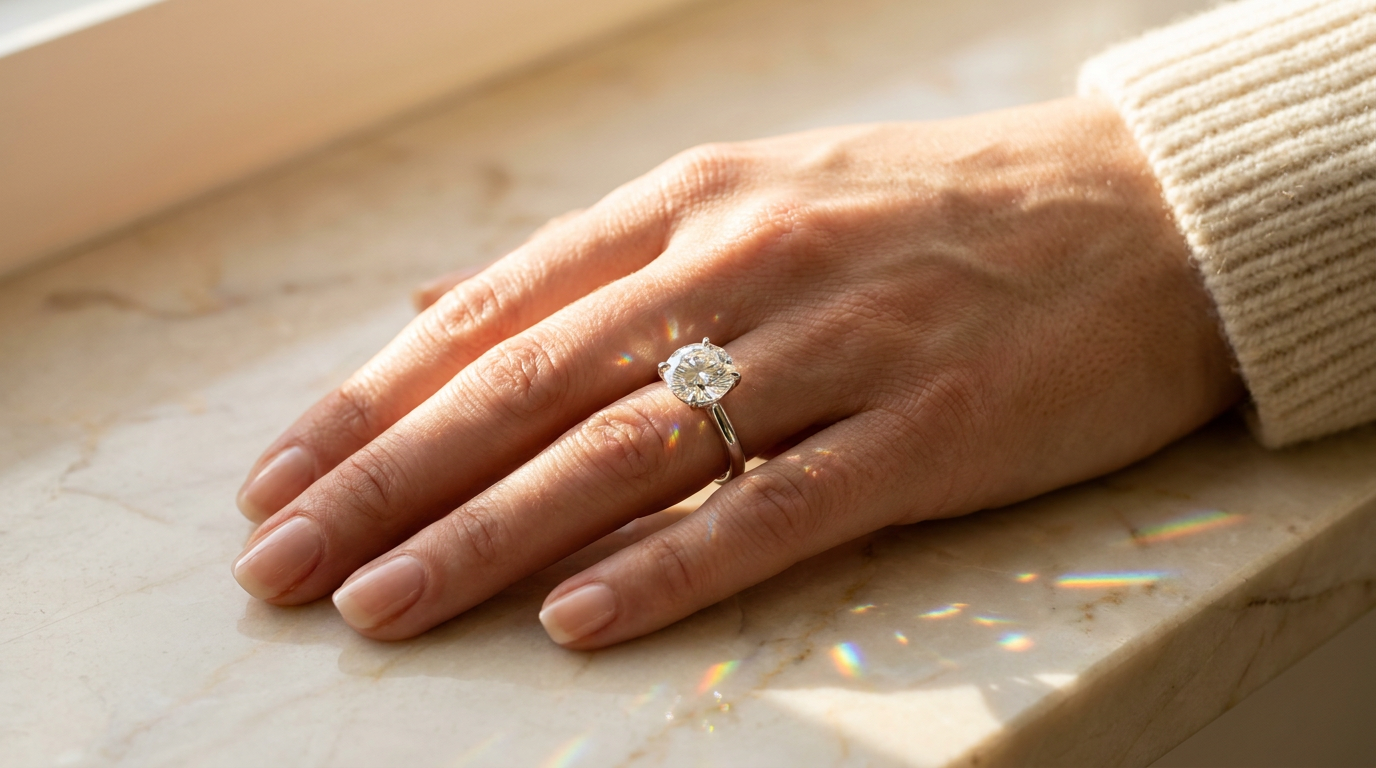
Lab-Grown vs. Mined Diamonds: The Complete Truth in 2026
 The diamond industry has changed more in the last three years than in the previous three decades — and if you are shopping for fine jewelry in 2026, knowing the real difference between lab-grown and mined diamonds could save you thousands and sharpen your choice.
Both are real diamonds. That is the most important sentence in this article. A lab-grown diamond is not a simulant, not a cubic zirconia, not an imitation. It shares the exact same chemical composition (pure carbon), the same crystal structure, the same physical hardness (10 on the Mohs scale), and the same optical brilliance as a diamond pulled from the earth. The only difference is where it was born.
How Lab-Grown Diamonds Are Created
Scientists replicate the same extreme heat and pressure conditions that form diamonds deep within the earth — but inside a controlled laboratory environment. Two processes dominate: HPHT (High Pressure High Temperature), which mimics the geological process directly, and CVD (Chemical Vapor Deposition), which grows diamond crystal layer by layer from a carbon-rich gas. Both result in a diamond that is physically and chemically indistinguishable from a mined stone. Even trained gemologists require specialized equipment to tell them apart.
Every lab-grown diamond we carry at Roomy’s is independently certified by recognized grading laboratories, assessed on the same 4 Cs — cut, color, clarity, and carat weight — that have always defined diamond quality. You get the same grading report, the same standards, the same sparkle. If you want to decode that report yourself, our guide on how to read a lab-grown diamond certificate walks through every line.
The Price Difference (And What It Really Means for You)
Here is where the conversation gets genuinely exciting. Lab-grown diamonds in 2026 typically cost 60–80% less than their mined equivalents of the same grade. That gap means a buyer who budgets $3,000 for a 1-carat mined diamond can instead choose a stunning 3- or even 4-carat lab-grown stone of equivalent quality. The money you save does not disappear — it goes toward a better cut, a more elaborate setting, or simply stays in your pocket.
This is why over 60% of engaged couples in 2026 are choosing lab-grown diamonds for their centerstone. It is not a compromise — it is a smarter allocation of the same meaningful investment.
Ethical and Environmental Considerations
Traditional diamond mining carries a well-documented environmental footprint — land disruption, water usage, and in some regions, deeply troubling human rights concerns. Lab-grown diamonds sidestep these issues entirely. They are conflict-free by definition, require no mining, and — especially when produced using renewable energy — carry a fraction of the environmental impact.
For the growing segment of buyers who want their purchase to reflect their values, this matters enormously. Gen Z in particular does not see lab-grown as a trade-down; they see mined as an unnecessary burden. In 2026, ethical sourcing is not a niche preference — it is a mainstream expectation.
Frequently Asked Questions
Are lab-grown diamonds real diamonds?
Will a lab-grown diamond hold its value?
Can a jeweler tell if my diamond is lab-grown?
Do lab-grown diamonds come with certification?
Shop the Pieces
See certified lab-grown diamond quality for yourself with these customer favorites:
- Butterfly Diamond Stud Earrings, an everyday classic in lab-grown brilliance
- Halo Diamond Circle Pendant, maximum sparkle for the budget
- Arc Diamond Band Ring, a clean modern band with certified stones
Keep reading: Diamond Stud Earrings: The Complete 2026 Buyer's Guide and 14K vs 18K Gold: Which Is Right for Your Lab-Grown Diamond Jewelry.
Find Your Perfect Lab-Grown Diamond
Every piece in our collection is crafted with certified lab-grown diamonds — the same brilliance, the same quality, a cleaner story.
Shop the Collection


